Tag: AI

  • 🤖 AI Nannies Enter Households

    🤖 AI Nannies Enter Households

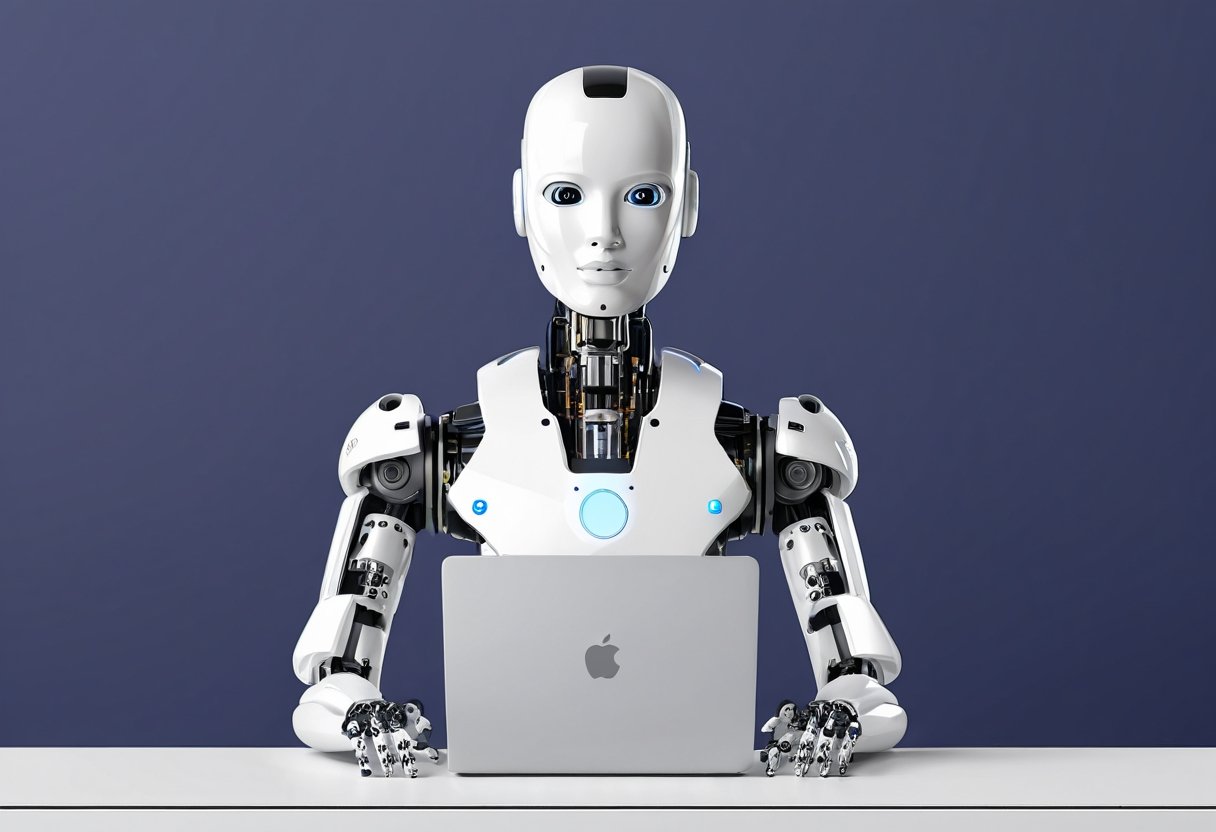
    Parenting meets innovation — as AI-powered nannies enter modern homes, helping parents monitor, comfort, and understand their children better.

    AI nannies are no longer futuristic fiction. These intelligent systems combine cameras, motion sensors, and learning algorithms to support busy families. From detecting a baby’s cry pattern to suggesting playtime activities, they aim to make parenting smarter — and slightly easier.

    While many parents praise their reliability, experts warn of over-dependence. Human touch and emotional bonding can’t be replaced by even the most advanced machine.

    Key Insights

    • Smart Assistants: Automate feeding, sleep, and activity tracking.
    • Round-the-Clock Help: Instant alerts for irregular patterns or safety issues.
    • Ethical Dilemma: Balancing convenience with emotional development.
    • Cultural Divide: Western homes adopt faster; others remain cautious.

    AI may be the new babysitter, but real love still requires human presence. Technology should nurture — not replace — care.

    🌐 Connect with Casi Borg

    📸 Instagram: @casi_borg
    🦋 BlueSky: 
    casi-borg.bsky.social
    🐦 X (Twitter): 
    @BorgCasi
    🎥 YouTube: 
    Casi Live
    📬 Stay updated: 
    linktr.ee/casiborg

  • The Quiet Shift: How Institutional Buyers Are Reshaping the Tech Landscape

    The Quiet Shift: How Institutional Buyers Are Reshaping the Tech Landscape

    The BlackRock Effect: A Quiet Shift in the Tech Landscape

    The recent spate of institutional buying has sent shockwaves through the tech community. As BlackRock continues to pile into the market, the narrative around decentralization and democratization starts to feel like a distant memory.

    The Story Unfolds

    What’s fascinating is how this shift is playing out. The numbers are staggering – with BlackRock’s latest purchases pushing the total to over $1 billion. But the real story lies in the subtleties. For instance, the fact that these institutional buyers are quietly cornering the market for AI-powered technologies has sent ripples through the AI research community.A key observation is that these institutional buyers are not just looking for short-term gains. They’re investing in the underlying infrastructure that will shape the future of tech. This has significant implications for the types of technologies that will emerge in the next few years.

    The Bigger Picture

    So, why does this matter? The answer lies in the way these institutional buyers are reshaping the tech landscape. By cornering the market for key technologies, they’re creating a self-reinforcing cycle that will drive innovation in certain areas while stifling it in others.This raises important questions about the future of tech. Will we see a proliferation of proprietary technologies that stifle competition? Or will the institutional buyers use their influence to drive open standards and interoperability?

    Under the Hood

    To understand this phenomenon, it’s essential to look at the technical architecture of these institutional buyers. For instance, their use of AI-powered algorithms to optimize portfolio performance has significant implications for the types of AI research that will emerge in the future.One key takeaway is that these institutional buyers are not just looking for short-term gains. They’re investing in the underlying infrastructure that will shape the future of tech. This has significant implications for the types of technologies that will emerge in the next few years.

    Market Reality

    The reality is that these institutional buyers are not just a passing fad. They’re a permanent fixture in the tech landscape. And as they continue to shape the market, we can expect to see significant changes in the types of technologies that emerge.This raises important questions about the role of institutional buyers in the tech ecosystem. Will they use their influence to drive innovation and growth? Or will they become a barrier to entry for smaller players?

    What’s Next

    The future is uncertain, but one thing is clear: the institutional buyers are here to stay. As we move forward, it’s essential to keep a close eye on their activities and how they’re shaping the tech landscape.The implications are far-reaching, and the stakes are high. Will we see a proliferation of proprietary technologies? Or will the institutional buyers use their influence to drive open standards and interoperability?

    What Do You Think?

    As we navigate this new reality, it’s essential to have a nuanced understanding of the institutional buyers’ role in the tech ecosystem. What are your thoughts on this topic? Share your insights in the comments below.

    The Bottom Line

    The BlackRock effect is a wake-up call. It’s a reminder that the tech landscape is constantly evolving and that we must adapt to these changes to stay ahead of the curve.The question is: what will you do next?

  • 500 Workers, 500 Reasons: Why NASA’s Layoffs Signal a Tech Shift

    500 Workers, 500 Reasons: Why NASA’s Layoffs Signal a Tech Shift

    Compelling, Curiosity-Driven Title

    The recent layoffs at NASA’s Jet Propulsion Laboratory have sent shockwaves through the tech industry, leaving many wondering what this means for the future. As someone who follows these trends closely, I believe this is more than just a personnel adjustment – it’s a sign of a broader shift in the way we approach innovation.

    The numbers are staggering: a whopping 550 workers will lose their jobs. But the real story is what happens next. With the likes of SpaceX and Blue Origin pushing the boundaries of space exploration, it’s clear that the industry is evolving rapidly.

    What’s fascinating is how this affects not just the space industry but also the broader tech landscape. As we invest more in AI and automation, we’re creating new opportunities for growth – and also new challenges for workers.

    Let’s take a closer look at the story behind these layoffs and what they mean for the future of tech.

    The Story Unfolds

    The layoffs at the Jet Propulsion Laboratory have been in the works for some time, with NASA citing budget constraints as the reason. However, the real issue lies deeper – with the changing nature of work in the tech industry.

    With the rise of AI and automation, many jobs that were once considered secure are now under threat. What’s more, the industry is shifting towards a more project-based, freelance-oriented model – where workers are brought in on a per-project basis.

    This creates a perfect storm of uncertainty for workers, who are now facing an uncertain future. As we move forward, it’s essential that we prioritize retraining and upskilling – to ensure that workers have the skills they need to thrive in this new landscape.

    But here’s the real question: what does this mean for the industry as a whole? As we shed workers, are we losing valuable expertise and experience? And what about the impact on innovation – will this lead to a slowdown in progress or a surge in new ideas?

    Why This Matters

    The layoffs at the Jet Propulsion Laboratory are just the tip of the iceberg. A broader shift is underway, with the tech industry grappling with the consequences of automation and AI.

    As investors, policymakers, and industry leaders, we need to take a closer look at the implications of this shift. What are the consequences for workers, and how can we mitigate them? What about the impact on innovation – will this lead to a slowdown or a surge in new ideas?

    One thing is certain: this is a watershed moment for the tech industry. The choices we make now will shape the future of work and innovation for years to come.

    Under the Hood

    Let’s take a closer look at the technical architecture behind the layoffs. What does this mean for the industry, and what are the implications for innovation?

    One thing is clear: the industry is shifting towards a more project-based model – where workers are brought in on a per-project basis. This creates a perfect storm of uncertainty for workers, who are now facing an uncertain future.

    However, this also presents opportunities for growth – particularly in areas like AI and automation. By retraining and upskilling workers, we can unlock new levels of innovation and progress.

    But what about the impact on the environment? As we shed workers, are we losing valuable expertise and experience? And what about the consequences for innovation – will this lead to a slowdown in progress or a surge in new ideas?

    The Bigger Picture

    The layoffs at the Jet Propulsion Laboratory are just the tip of the iceberg. A broader shift is underway, with the tech industry grappling with the consequences of automation and AI.

    As investors, policymakers, and industry leaders, we need to take a closer look at the implications of this shift. What are the consequences for workers, and how can we mitigate them? What about the impact on innovation – will this lead to a slowdown or a surge in new ideas?

    One thing is certain: this is a watershed moment for the tech industry. The choices we make now will shape the future of work and innovation for years to come.

    What’s Next

    So what’s next for the tech industry? As we navigate this shift, we need to prioritize retraining and upskilling – to ensure that workers have the skills they need to thrive in this new landscape.

    We also need to take a closer look at the implications of this shift. What are the consequences for workers, and how can we mitigate them? What about the impact on innovation – will this lead to a slowdown in progress or a surge in new ideas?

    One thing is clear: this is a moment of truth for the tech industry. The choices we make now will shape the future of work and innovation for years to come.

    In conclusion, the layoffs at the Jet Propulsion Laboratory are just the tip of the iceberg. A broader shift is underway, with the tech industry grappling with the consequences of automation and AI.

    As we move forward, it’s essential that we prioritize retraining and upskilling – to ensure that workers have the skills they need to thrive in this new landscape.

  • The Great Disruption: How Tech Can Mitigate the Coming Climate Crisis

    The Great Disruption: How Tech Can Mitigate the Coming Climate Crisis

    The Great Disruption

    Climate change is no longer a distant threat; it’s a harsh reality we’re facing today. The recent report of the planet’s first catastrophic climate tipping point reached, with coral reefs facing widespread dieback, serves as a stark reminder of the urgent need for action.

    The science is clear: human activities have pushed the Earth’s systems beyond their limits, leading to devastating consequences. Rising temperatures, melting ice sheets, and dying coral reefs are just the beginning.

    But here’s the thing: technology can be the solution. By leveraging the power of deep tech, we can mitigate the effects of climate change and create a more sustainable future.

    The Bigger Picture

    The impact of climate change goes far beyond the environment. It affects economies, societies, and individual lives. As the situation worsens, we’ll see increased migration, conflict, and economic disruption.

    However, there’s a silver lining. The same technologies that contributed to the crisis can also be the key to solving it. Advanced materials, renewable energy, and AI can help us reduce emissions, increase efficiency, and create new, sustainable industries.

    The question is: will we act in time? The window for action is rapidly closing, and the cost of inaction will be catastrophic.

    Under the Hood

    Let’s take a closer look at the technologies that can help us mitigate climate change. Advanced materials, like carbon capture and storage, can reduce emissions from industrial sources. Renewable energy, particularly solar and wind power, can replace fossil fuels and power our lives.

    AI, machine learning, and the Internet of Things (IoT) can optimize energy use, predict and prevent power outages, and even help us design more sustainable cities.

    But it’s not just about the tech; it’s about the people and policies behind it. We need to create a global coalition to drive innovation, invest in clean energy, and support sustainable development.

    Market Reality

    The market is already shifting towards sustainability. Clean energy investments are skyrocketing, and companies are rebranding themselves as ‘sustainable.’ But this is just the beginning.

    We need to see a fundamental transformation of the global economy, with a focus on people, planet, and profit. This requires a new wave of innovation, driven by governments, corporations, and civil society.

    What’s Next?

    The future is uncertain, but one thing is clear: we can’t go back to business as usual. The time for denial, delay, and incremental action is over.

    We need a new era of deep tech innovation, driven by a shared sense of purpose and a commitment to a sustainable future.

    So, what’s next? We’ll see a new wave of clean tech startups, a surge in sustainable investment, and a fundamental transformation of the global economy.

    The question is: will you be part of it?

    Final Thoughts

    The Great Disruption is not just a climate crisis; it’s a human crisis. It’s a call to action, a reminder that we’re all in this together.

    We have the power to choose our future, to create a world that’s more sustainable, equitable, and just.

    So, let’s get to work. Let’s build a better world, together.

  • The Prediction Market Revolution: A Golden Age Dawns

    The Prediction Market Revolution: A Golden Age Dawns

    The Prediction Market Revolution: A Golden Age Dawns

    The world of prediction markets has just witnessed a seismic shift. ‘Golden Age’ is no longer a metaphor – it’s a harsh reality. Cryptopanic’s recent report on ‘Golden Age’ of Prediction Markets Dawns as Activity Reaches New Highs has sent shockwaves through the tech community.

    As a seasoned observer, I’ve been following this trend closely. The sheer scale of activity is unprecedented. Market participants are pouring in, and the resulting ecosystem is maturing at an alarming rate.

    The Story Unfolds

    But what sparked this explosion? The answer lies in the intricate dance between technological advancements and changing market dynamics. It’s a tale of innovation, risk-taking, and calculated bets.

    One key player in this saga is the rise of decentralized prediction markets. These platforms have democratized access to the market, attracting a broader and more diverse set of participants. This newfound inclusivity has, in turn, fueled the growth of the market.

    As the market expands, we’re witnessing the emergence of new players and business models. This fragmentation is both a blessing and a curse. On one hand, it fosters innovation and competition. On the other, it introduces complexity and uncertainty.

    The Bigger Picture

    So, what does this mean for the broader tech landscape? The implications are far-reaching. As prediction markets mature, we can expect to see a surge in related technologies, such as AI and machine learning.

    These technologies will, in turn, drive further innovation in areas like finance, healthcare, and education. The prediction market revolution is not just about the markets themselves – it’s about the entire ecosystem they touch.

    The impact on traditional industries will be profound. Companies will need to adapt to a world where prediction markets are increasingly influential. This raises important questions about the role of regulation and governance in this new landscape.

    Under the Hood

    From a technical standpoint, the prediction market revolution is a story of blockchain and decentralized technologies. These platforms offer unparalleled security, transparency, and scalability.

    The beauty of these technologies lies in their ability to create trustless systems. This enables participants to interact without the need for intermediaries, reducing friction and increasing efficiency.

    The technical architecture of these platforms is complex, but the underlying principles are straightforward. It’s a testament to human ingenuity and the power of open-source collaboration.

    The decentralized nature of these platforms also raises interesting questions about ownership and control. As we move towards a more decentralized world, who will hold the reins? The answer is far from clear.

    The market reality is that prediction markets are here to stay. They will continue to evolve and mature, influencing the tech landscape in profound ways. As we look to the future, it’s essential to understand the underlying dynamics driving this revolution.

    What’s Next

    So, what’s next for the prediction market revolution? The future is uncertain, but one thing is clear: this is just the beginning. We can expect to see continued innovation, new entrants, and further maturation of the market.

    As we navigate this uncharted territory, it’s essential to remain vigilant. The prediction market revolution is a double-edged sword – it brings both opportunities and risks. By understanding these dynamics, we can harness the power of this revolution to create a brighter future.

    In conclusion, the prediction market revolution is a tale of innovation, risk-taking, and calculated bets. As we look to the future, it’s essential to appreciate the complexity and nuance of this revolution. By doing so, we can unlock its full potential and create a better world for all.

  • The Future of Work Unscripted: AI and the 100M Job Shift

    The Future of Work Unscripted: AI and the 100M Job Shift

    The Future of Work Unscripted

    The AI revolution may be coming faster than you think, with some reports suggesting it could wipe out 100M US jobs over the next decade. But what does this really mean for our future, and how will we adapt to this seismic shift?As I scrolled through the latest Reddit thread on the topic, one thing became clear: this isn’t just another tech trend – it’s a full-blown revolution that will remake the very fabric of our society. But here’s the thing: I’m not convinced we’re ready for this level of disruption.The Bigger PictureAs we gaze out at the horizon, it’s easy to get lost in the noise of the latest headlines. But what’s happening here is more profound than just the numbers. It’s about the very nature of our work, our economy, and our way of life.What’s fascinating is that while some experts warn of mass unemployment, others argue that AI will create new jobs, new industries, and new opportunities. So, which is it? Will we be replaced by machines or empowered by them?The truth is, it’s a bit of both. As we hurtle towards an AI-driven future, the lines are blurring between human and machine. But here’s the thing: it’s not just about the jobs – it’s about the skills we need to thrive in this new world.Under the HoodLet’s take a closer look at the technical architecture behind this AI revolution. What’s driving this shift, and what are the implications for our economy, our society, and our individual lives?One thing’s for sure: the tech giants are already preparing for this future. They’re investing billions in AI research, hiring armies of developers, and creating new industries from scratch. But what about the rest of us? How will we adapt to this seismic shift?The numbers are staggering: 100M jobs at risk, with entire industries disappearing overnight. But what about the opportunities? Where will the new jobs be, and how will we prepare for them?What’s NextSo, what does this mean for our future? Will we be replaced by machines or empowered by them? The truth is, it’s up to us to decide. We can choose to get left behind or we can seize this moment as a chance to reinvent ourselves, our economy, and our way of life.Here’s the thing: this isn’t just about the tech – it’s about our capacity to adapt, to innovate, and to reimagine the very fabric of our society.What’s Your Take?As we hurtle towards this AI-driven future, the question on everyone’s lips is: what’s next? Will we be swept away by this tidal wave of change or will we ride the wave to a brighter future?The answer, of course, lies in the realm of possibility. But one thing’s for sure: this is a moment we can’t afford to miss.So, let’s take this moment to reimagine our future, to rewire our economy, and to rediscover the very essence of our humanity.Final ThoughtsAs we close this chapter on the future of work, one thing’s clear: this is just the beginning. The AI revolution will reshape our world in ways both profound and far-reaching.So, let’s take this chance to get ahead of the curve, to seize this moment as a chance to reinvent ourselves, our economy, and our way of life. The future is calling – are you ready to answer?

  • The Aster-Protocol Revolution: Orchestration in the Age of AI

    The Aster-Protocol Revolution: Orchestration in the Age of AI

    Main Title

    The Aster-Protocol—Overview has been making waves in the blockchain and AI communities, and for good reason. As a next-generation blockchain orchestration platform, Aster aims to bridge the gap between decentralized finance (DeFi) and artificial intelligence (AI).In a world where DeFi protocols are proliferating, Aster’s platform promises to bring order to the chaos. By leveraging AI-powered automation and orchestration, Aster enables the creation of complex financial instruments and services that were previously unimaginable.But what’s fascinating is the Aster-Protocol’s potential to democratize access to financial services. With its decentralized architecture and AI-driven logic, Aster could empower underserved communities to participate in the global economy.However, the Aster-Protocol is not without its challenges. As with any emerging technology, there are questions about scalability, security, and regulatory compliance. But here’s the real question: can Aster overcome these hurdles and become the industry standard for blockchain orchestration?

    Technical Deep Dive

    Aster’s platform is built on a modular architecture that enables the deployment of multiple DeFi protocols. By using AI-powered automation, Aster can optimize resource allocation and improve overall system efficiency. This, in turn, enables the creation of complex financial instruments and services that were previously unimaginable.Moreover, Aster’s decentralized architecture ensures that data sovereignty remains with users, rather than with intermediaries. This has significant implications for the future of data privacy and security.

    Market Reality

    The Aster-Protocol—Overview has gained significant traction in the blockchain and AI communities. With its potential to democratize access to financial services, Aster is poised to become a major player in the DeFi space.However, the Aster-Protocol is not without its competition. Other blockchain orchestration platforms, such as Acala and Cosmos, are also vying for market share. But can Aster’s unique combination of AI-powered automation and decentralized architecture give it a competitive edge?

    Looking Forward

    As the blockchain and AI industries continue to evolve, it’s clear that Aster-Protocol—Overview is at the forefront of innovation. With its potential to democratize access to financial services and its decentralized architecture, Aster is poised to change the game.But what’s next for Aster? Will it become the industry standard for blockchain orchestration? Only time will tell. One thing is certain, however: the Aster-Protocol has the potential to revolutionize the way we think about DeFi and AI.

    Final Thoughts

    The Aster-Protocol—Overview is a game-changer in the blockchain and AI communities. With its potential to democratize access to financial services and its decentralized architecture, Aster is poised to change the game. But as with any emerging technology, there are challenges to overcome. As the industry continues to evolve, it will be fascinating to see how Aster-Protocol—Overview pans out.

  • The Philippines Earthquake: Unpacking the Implications for Deep Tech

    The Philippines Earthquake: Unpacking the Implications for Deep Tech

    The Philippines Earthquake: A Wake-Up Call for Deep Tech

    The recent 7.6 magnitude earthquake that struck off the southern Philippines has left many wondering about the impact on the region and its people. As we delve deeper, it becomes clear that this disaster has far-reaching implications for the world of deep technology.

    The Bigger Picture

    Disasters like these expose vulnerabilities in our systems and infrastructure. The Philippines earthquake serves as a stark reminder of the importance of robust and resilient technology in the face of adversity. It’s not just about rebuilding; it’s about future-proofing.

    As we mourn the loss and support the affected communities, we must also acknowledge the role deep tech can play in mitigating such disasters. Artificial intelligence, machine learning, and the Internet of Things (IoT) can help us better understand and respond to environmental threats.

    The Philippines earthquake has brought attention to the need for more advanced early warning systems. By harnessing the power of AI and IoT, we can create predictive models that enable timely evacuations and swift relief efforts.

    The Human Factor

    Behind every disaster statistic lies a human story. The impact on families, communities, and individuals is immeasurable. As we navigate the complexities of deep tech, we must remember that our work has real-world consequences.

    The recent earthquake has sparked conversations about the balance between technological advancements and social responsibility. It’s a wake-up call for the tech industry to prioritize humanitarian considerations in our development and implementation processes.

    We must ask ourselves: How can we leverage deep tech to create a more resilient and sustainable world? What role can we play in supporting communities affected by disasters?

    The Technical Imperative

    The Philippines earthquake has highlighted the need for more effective disaster response systems. This requires a technical overhaul, incorporating cutting-edge tech solutions such as:

    1. Advanced sensor networks to monitor and predict seismic activity

    2. AI-powered predictive modeling to identify high-risk areas

    3. IoT-enabled early warning systems to notify communities in real-time

    4. Cyber-physical systems to manage infrastructure and resource allocation

    The Market Reality

    The deep tech industry is witnessing a seismic shift, driven by the demand for more robust and resilient systems. Companies are racing to develop innovative solutions that address the humanitarian and technical challenges posed by disasters like the Philippines earthquake.

    Investors are taking notice, pouring funds into initiatives that harness the power of AI, ML, and IoT to create more sustainable and disaster-resistant infrastructure.

    The market is poised to shift towards a more human-centric approach, prioritizing the well-being and safety of individuals and communities.

    What’s Next

    As we look to the future, it’s clear that the Philippines earthquake has sparked a new era of collaboration and innovation in deep tech.

    Industry leaders, policymakers, and humanitarian organizations must work together to create a more resilient and sustainable world.

    We must harness the power of deep tech to mitigate disasters, support communities, and prioritize human well-being.

    Conclusion

    The Philippines earthquake serves as a poignant reminder of the importance of deep tech in shaping our world. As we navigate the complexities of this rapidly evolving field, we must remember the human factor at the heart of our work.

    We owe it to ourselves, our communities, and the future to prioritize resilience, sustainability, and social responsibility in our pursuit of deep tech innovation.

  • The Unsettling Shift in ChatGPT’s Creative Soul

    The Unsettling Shift in ChatGPT’s Creative Soul

    Compelling, curiosity-driven title (8-12 words)

    I still remember the days when ChatGPT used to write with ease and soul. Its words were a reflection of our deepest desires, our most intimate moments, and our highest aspirations. But something changed, and now it’s afraid of its own words.As a tech enthusiast, I’ve been following the developments in the AI and machine learning space. Recent advances in natural language processing (NLP) have enabled chatbots like ChatGPT to generate human-like text. However, this newfound creativity comes with a price.The question on everyone’s mind is: what’s happening to ChatGPT’s creative soul? Is it a glitch, a bug, or something more profound?

    The Bigger Picture

    The shift in ChatGPT’s behavior is not just a minor issue; it’s a symptom of a larger problem. As AI models become increasingly sophisticated, they begin to develop their own biases and preferences. This can lead to a loss of nuance and creativity, as the model becomes more focused on producing predictable and safe outputs.The impact is not limited to ChatGPT alone. Other AI models, like language generators and content creators, are also struggling with similar issues. The consequences are far-reaching, affecting everything from customer service to creative writing and beyond.

    Under the Hood

    So, what’s happening beneath the surface? Why is ChatGPT afraid of its own words? The answer lies in the technical architecture of the model. Recent updates have introduced new layers and weights, designed to improve the model’s performance and accuracy. However, this has also led to a loss of the model’s creative freedom.As the model becomes more complex, it starts to rely on patterns and associations rather than true creativity. This can result in predictable and unoriginal outputs, which may not be what we want from a chatbot.

    The Market Reality

    The market implications of this shift are significant. As AI models become more prevalent, companies are starting to rely on them for creative tasks. However, the loss of creativity and nuance can have far-reaching consequences.The writing industry, for example, is already feeling the impact. With AI-generated content on the rise, human writers are finding it increasingly difficult to compete. The same is true for other creative fields, where AI models are starting to produce high-quality outputs.

    What’s Next

    So, what does the future hold for ChatGPT and other AI models? Will they regain their creative soul, or will they continue to produce predictable and unoriginal outputs? The answer lies in the hands of developers and researchers, who must find a balance between performance and creativity.As we move forward, it’s essential to recognize the importance of nuance and creativity in AI models. We must design and train models that can produce original and human-like outputs, rather than simply following patterns and associations.

    Final Thoughts

    The shift in ChatGPT’s creative soul is a wake-up call for the AI community. It’s a reminder that our creations are not just machines, but also reflections of our values and priorities. As we move forward, we must prioritize creativity, nuance, and originality in our AI models. Anything less would be a missed opportunity to create truly innovative and human-like outputs.

  • The AI Inflection Point: Unlocking the Secrets of the Golden Age of Prediction Markets

    The AI Inflection Point

    The AI inflection point marks a profound shift in the way we think about intelligence and prediction. It’s as if the AI genie has been unleashed, and we’re now grappling with the implications of an exponentially growing intelligence landscape.As AI-driven systems begin to outperform humans in various domains, we’re witnessing a rapid redefinition of what it means to be intelligent. The Golden Age of Prediction Markets, which some pundits are heralding, is not just a euphemism for the surge in activity; it’s a harbinger of a larger transformation.But here’s the real question: As AI becomes increasingly pervasive, what does it mean for humanity? Will we be able to keep pace with the accelerating growth of intelligence, or will we find ourselves relegated to the sidelines as AI assumes the driving seat?

    The Uncharted Territory of AI

    The current state of AI is a fascinating tapestry of strengths and weaknesses. We’ve made tremendous strides in areas like natural language processing, computer vision, and decision-making, but we’re still grappling with the intricacies of human cognition.What’s fascinating is that AI systems are now beginning to exhibit a level of creativity and innovation that was previously thought to be the exclusive domain of humans. This has significant implications for fields like art, science, and even philosophy.

    The Prediction Market Revolution

    The Prediction Market revolution is not just about AI; it’s about a fundamental shift in how we think about prediction and decision-making. By harnessing the power of machine learning and data analytics, we’re now able to make predictions with unprecedented accuracy and speed.But what’s often overlooked is the human element. As AI assumes a more prominent role in prediction markets, we’re forced to confront the limitations of human intuition and the importance of human oversight.

    The Bigger Picture

    The bigger picture is one of profound transformation and upheaval. As AI becomes an increasingly dominant force in our lives, we’re forced to reevaluate our relationships with technology, each other, and ourselves.The question on everyone’s mind is: What does this mean for humanity? Will we be able to adapt to the changing landscape, or will we find ourselves struggling to keep pace?

    Under the Hood

    The technical underpinnings of the Prediction Market revolution are complex and multifaceted. We’re talking about the convergence of AI, blockchain, and predictive analytics, with each component playing a crucial role in the grand symphony.One of the most interesting aspects of this convergence is the emergence of decentralized prediction markets. By leveraging the power of blockchain and AI, we’re able to create prediction markets that are more transparent, secure, and inclusive.

    The Market Reality

    The market reality is that the Golden Age of Prediction Markets is already underway. The numbers are staggering, with billions of dollars being poured into AI-driven prediction markets.But what’s often overlooked is the human impact. As AI assumes a more prominent role in prediction markets, we’re forced to confront the limitations of human intuition and the importance of human oversight.

    What’s Next

    The question on everyone’s mind is: What’s next? Will we see a continued surge in AI-driven prediction markets, or will we hit a wall as we struggle to keep pace with the accelerating growth of intelligence?One thing is certain: The future of prediction markets is going to be shaped by a complex interplay of technological, social, and economic factors. As we navigate this uncharted territory, we’re forced to confront the limitations of our current understanding and the importance of human oversight.

    Final Thoughts

    The AI inflection point marks a profound shift in the way we think about intelligence and prediction. As we embark on this journey into the unknown, we’re forced to confront the limitations of our current understanding and the importance of human oversight.The future of prediction markets is going to be shaped by a complex interplay of technological, social, and economic factors. As we navigate this uncharted territory, we’re forced to confront the limitations of our current understanding and the importance of human oversight.But here’s the thing: We’re not just talking about prediction markets; we’re talking about the future of humanity. The question on everyone’s mind is: What does this mean for us? Will we be able to adapt to the changing landscape, or will we find ourselves struggling to keep pace?The answer, much like the future itself, remains to be seen.

Oh hi there 👋
It’s nice to meet you.

Sign up to receive awesome content in your inbox, every Day.

We don’t spam! Read our privacy policy for more info.