Tag: Donald Trump

  • Trump Withdraws Canada’s Invitation to Board of Peace

    Trump Withdraws Canada’s Invitation to Board of Peace

    Introduction

    US President Donald Trump has withdrawn Canada’s invitation to join the ‘Board of Peace’, a Gaza peace initiative he announced at the World Economic Forum in Davos. This move comes after Canadian Prime Minister Mark Carney’s speech at the World Economic Forum, where he criticized powerful nations for using economic integration as weapons and tariffs as leverage.

    Background

    According to sources, including Reuters and The Economic Times, Trump’s decision to withdraw the invitation was made in response to Carney’s comments. Trump stated in a Truth Social post that the Board of Peace is withdrawing its invitation to Canada, citing that the board will be the most prestigious board of leaders ever assembled.

    Implications

    The withdrawal of Canada’s invitation has significant implications for the Board of Peace and its goals. As reported by Republic World, the board was initially intended to cement a Gaza ceasefire, but Trump sees it as playing a wider role in global politics. The move may also affect the relationships between the US, Canada, and other countries involved in the initiative.

    Expert Insights

    Experts believe that Trump’s decision may be seen as a retaliatory measure against Canada’s criticism of US policies. As noted by CTV News, the move may also impact the overall effectiveness of the Board of Peace in achieving its goals.

  • Trump’s Greenland Deal Framework with NATO

    Trump’s Greenland Deal Framework with NATO

    Introduction to the Greenland Deal

    President Donald Trump recently announced that he has reached a framework for a deal with NATO regarding Greenland, which includes access to mineral rights and collaboration on the Golden Dome. This move has sparked significant interest and discussion globally, with many wondering what this means for the future of international relations and global security.

    Background on the Greenland Issue

    The issue of Greenland has been a point of contention for some time, with Trump expressing interest in acquiring the territory. However, this has been met with resistance from Denmark, Norway, Sweden, France, Germany, the Netherlands, and Finland – all of which are members of NATO. The situation escalated when Trump threatened to impose tariffs on these European countries if they did not support a U.S. deal to purchase Greenland.

    Key Points of the Deal

    According to Trump, the framework of the deal involves mineral rights for the U.S. and its European allies, as well as collaboration on the Golden Dome. The president has stated that the deal will last forever, indicating a long-term commitment to the agreement. Trump also mentioned that he would not impose the tariffs that were scheduled to go into effect on February 1, following the productive meeting with NATO Secretary General Mark Rutte.

    Reactions and Implications

    The reaction to the deal has been mixed, with some hailing it as a significant step forward in international cooperation, while others have expressed skepticism about the details and implications of the agreement. As CNBC reports, the deal is seen as a way to reduce U.S. dependence on China for rare earth minerals, which are crucial for many modern technologies.

    Expert Insights and Analysis

    Experts have pointed out that the deal is likely to have significant implications for global security and the future of international relations. As BBC News notes, the agreement may set a precedent for future cooperation on issues related to the Arctic region. Additionally, the deal may have implications for the global economy, particularly in the areas of trade and resource extraction.

    Conclusion and Future Implications

    In conclusion, the framework for a deal on Greenland between the U.S. and NATO is a significant development with far-reaching implications. As the situation continues to evolve, it will be important to monitor the details of the agreement and its impact on global security, international relations, and the economy. For now, it seems that the deal has the potential to be a positive step forward in international cooperation, but only time will tell if it will ultimately be successful.

  • Trump’s Gas Price Rule and Bitcoin’s Fate

    Trump’s Gas Price Rule and Bitcoin’s Fate


    Introduction to the 10% Gas Price Rule

    According to Arthur Hayes, co-founder of BitMex, President Trump’s Venezuela move could have a significant impact on Bitcoin’s price. Hayes explains that Trump’s strategy is to print massive amounts of money to boost the economy, making voters feel rich, while keeping gas prices from spiking to avoid alienating them.

    The 10% Rule and Its Implications

    Hayes points to the ‘10% rule’ that has decided past elections: when national average gas prices rise 10% or more in the three months before an election compared to January of that year, control of the government switches parties. This rule is crucial in understanding Trump’s move on Venezuela, which has the world’s largest proven oil reserves.

    Bitcoin’s Fate Tied to Gas Prices

    Hayes believes that if liquidity increases while gas prices stay cheap, Bitcoin’s price will surge. However, if oil prices spike, the rally will die. This creates a simple trade based on the 10% gas price rule.

    Expert Insights and Analysis

    As an expert in the field, it’s clear that the relationship between gas prices, economic policy, and cryptocurrency is complex. The 10% rule serves as a significant indicator of election outcomes and, by extension, the fate of Bitcoin.

    The move on Venezuela is a strategic play to keep gas prices low, potentially boosting the economy and supporting Trump’s re-election bid. However, the impact on Bitcoin and the broader cryptocurrency market will depend on how these factors interplay.

    Conclusion and Future Implications

    In conclusion, the 10% gas price rule will play a crucial role in deciding Bitcoin’s fate in 2026. As the situation unfolds, it’s essential to keep a close eye on gas prices, economic policy, and their impact on the cryptocurrency market.

  • Trump’s 2025 Deal Sparks Controversy Over AI Chip Sales to China

    Trump’s 2025 Deal Sparks Controversy Over AI Chip Sales to China

    Introduction to the Controversy

    President Trump’s 2025 deal allowing Nvidia and AMD to sell AI chips to China has sparked intense controversy. The arrangement, which promises a 15-25% U.S. revenue share, has been touted as a means to fund innovation but criticized for potential security risks. As reported by WebProNews and CNBC, this move has significant implications for U.S.-China tech relations.

    Details of the Deal

    According to CNBC, Nvidia and AMD agreed to share 15% of the revenue from China chip sales with the U.S. government. However, President Trump later announced that Nvidia would be allowed to ship its H200 artificial intelligence chips to ‘approved customers’ in China, with the U.S. receiving a 25% cut. This inconsistency has fueled criticism from lawmakers and experts, as highlighted by Bloomberg.

    Implications and Criticisms

    The deal has been criticized for its potential to undermine U.S. national security. As Reuters reports, the U.S. administration has launched a review that could result in the first shipments to China of Nvidia’s second-most powerful AI chips. This has raised concerns among China hawks across the U.S. political spectrum, who fear that the chips could supercharge Beijing’s military and erode the U.S. advantage in artificial intelligence.

    Expert Insights and Analysis

    Experts argue that shipping advanced AI chips to China could have significant implications for the future of U.S.-China relations and the global tech industry. As PBS notes, there are concerns about allowing advanced computer chips to be sold to China, as it could help the country better compete against the U.S. in building out AI capabilities.

    Conclusion and Future Implications

    In conclusion, Trump’s 2025 deal allowing Nvidia and AMD to sell AI chips to China has sparked controversy and raised significant questions about the implications for U.S. national security and the global tech industry. As the situation continues to unfold, it is essential to consider the potential long-term consequences of this decision and the future of U.S.-China tech relations.

  • Trump Holds Off on Canada Tariff Increase

    Introduction to the Tariff Situation

    The United States and Canada have a long history of trade, with Canada being one of the largest trading partners of the US. Recently, there have been tensions between the two countries regarding tariffs. According to PBS News, Trump had threatened to increase tariffs on Canadian goods by 10% if Canada did not pull down a critical ad sooner.

    Impact of Tariffs on Canada

    Canada’s economy has been hit hard by Trump’s tariffs, with more than three-quarters of Canadian exports going to the US. Nearly $3.6 billion Canadian ($2.7 billion US) worth of goods and services cross the border daily. Many Canadian products have been hit with a 35% tariff, while steel and aluminum face rates of 50%. Energy products have a lower rate of 10%, while the vast majority of goods are covered by the U.S.-Canada-Mexico Agreement, and are exempt from tariffs.

    Reasons Behind the Tariff Increase

    Trump negotiated the U.S.-Canada-Mexico Agreement in his first term, but has since soured on it. The trade agreement is slated for review, which may lead to changes in the tariff rates. A spokesperson for Canadian Prime Minister Mark Carney did not immediately respond to a request for comment.

    Conclusion and Future Implications

    In conclusion, the tariff situation between the US and Canada is complex and may have significant implications for both countries. It is essential to monitor the situation closely and be aware of any changes that may affect trade between the two nations.

  • The Epstein File and the Snowball Effect

    The Epstein File Controversy

    The Epstein file controversy has sparked a heated debate within the MAGA movement, with some supporters calling for transparency and others defending President Trump’s handling of the situation. According to POLITICO, the split over Epstein represents one of the biggest rifts within Trump’s supporters since the president took office for his second term.

    MAGA Rebellion

    The MAGA faithful are furious not just about Epstein but also other broken promises, as WIRED reported earlier this week. The bungled rollout of the Epstein materials, Trump advisers tell WIRED, goes back to February, when the White House gave conservative influencers binders full of materials that were mostly already public information about the disgraced financier and charged sex trafficker.

    Consequences of the Rebellion

    The Epstein files saga has shown that the base’s willingness to abide Trump has its limits — or at least, it does when the base feels strongly enough and when the president’s political capital starts to wane, as CNN notes. This increasingly seems like a moment marking a distinct epoch, with WIRED suggesting that the Epstein toothpaste can’t be put back in the tube.

    Expert Insights

    Experts agree that the drama around the files has punctured Trump’s aura of invincibility within the MAGA movement in a way few, if any, things have before. As CNN reports, the man who has for a decade dominated his base and told it what to care about has backed down when that base decided its priorities didn’t align with his own.

    The BBC notes that according to Trump, the pair fell out in the early 2000s, two years before Epstein was first arrested. The White House has recently suggested that their fallout was connected to Epstein’s behaviour, and that ‘the president kicked him out of his club for being a creep’.

    Takeaways and Future Implications

    The Epstein file controversy has significant implications for the future of the MAGA movement and President Trump’s administration. As PBS reports, the economy is still going to be front and center next year, but the Epstein files show vulnerability for Trump, and maybe that’s why he’s resisted them so much.

  • FCC Chairman Backs Trump’s Call to Fire Seth Meyers

    FCC Chairman Backs Trump’s Call to Fire Seth Meyers

    Introduction

    The recent clash between Donald Trump and Seth Meyers has taken a new turn, with FCC Chairman Brendan Carr reposting Trump’s call for NBC to fire the late-night host. This move has sparked controversy and raised questions about the role of the FCC in regulating media content.

    Background

    Trump’s post on Truth Social criticized Meyers for his jokes about the president’s plans for healthcare, the government shutdown, and his association with convicted sex offender Jeffrey Epstein. Trump claimed that Meyers was suffering from ‘Trump Derangement Syndrome’ and that his show was a ‘Ratings DISASTER.’

    According to Variety, Carr’s repost of Trump’s message has been seen as a sign of support for the president’s demand. This is not the first time Carr has been involved in a controversy related to media regulation, having previously suggested that the FCC could take action against ABC over comments made by Jimmy Kimmel.

    Implications

    The implications of Carr’s actions are significant, as they raise concerns about the independence of the FCC and its ability to regulate media content without political bias. As Deadline reports, some progressives have criticized Carr’s move, with one Democrat comparing it to the kind of censorship seen in North Korea.

    Analysis

    The situation highlights the complex relationship between the government, media, and the FCC. While the FCC is responsible for regulating media content, its role is not to dictate what can and cannot be said on television. As EW notes, Meyers has been a vocal critic of Trump, and his jokes have been seen as a form of satire and social commentary.

    Conclusion

    In conclusion, the controversy surrounding Carr’s repost of Trump’s call to fire Seth Meyers raises important questions about the role of the FCC in regulating media content. While the FCC has a responsibility to ensure that media outlets comply with regulations, it must also balance this with the need to protect free speech and the independence of the media.

  • Obama Criticizes Trump’s Crypto Fortune Amidst Election

    Obama Criticizes Trump’s Crypto Fortune Amidst Election

    Introduction

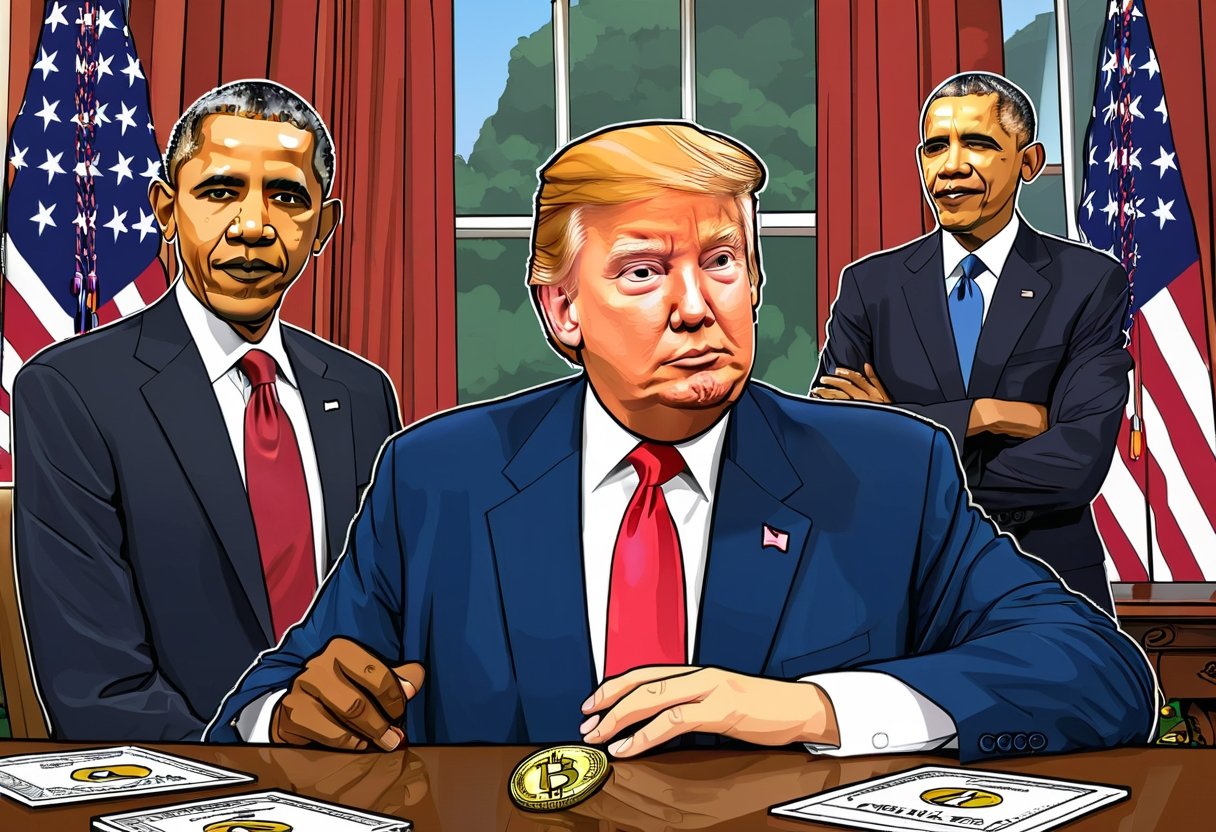
    Former US President Barack Obama has criticized Donald Trump over his involvement with cryptocurrency, speaking during a rally in support of Virginia Democratic gubernatorial candidate Abigail Spanberger. According to Reddit, Obama accused President Trump of prioritizing his “billionaire pals and finance bros” over the needs of the American people.

    Background

    As reported by Medium, Obama emphasized the importance of elections, stating that they matter and have a significant impact on the country’s democracy. He also highlighted the dangers of lawlessness and recklessness in the current political climate.

    Key Points

    Obama’s criticism of Trump’s crypto involvement is not the only aspect of his speech. He also touched upon the economy, stating that it has gotten better for Trump and his family since he took office, with their crypto business and other ventures making hundreds of millions of dollars. This information is also supported by Virginia Mercury.

    Analysis

    The situation highlights the complex relationship between politics and cryptocurrency. As PBS notes, Obama’s appearance at the rally was a significant event, with the former President urging voters to set a glorious example for the nation by rebuking Trump and his nominees.

    Expert Insights

    Experts in the field of cryptocurrency and politics have weighed in on the situation, providing unique perspectives on the matter. Some have noted that Obama’s criticism of Trump’s crypto involvement may be a strategic move to sway public opinion, while others believe it is a genuine concern for the country’s economic well-being.

    Conclusion

    In conclusion, the criticism by Obama of Trump’s crypto fortune is a significant event that highlights the complex relationship between politics and cryptocurrency. As the situation continues to unfold, it is essential to stay informed and consider the potential implications for the country’s democracy and economy.

  • Binance.US Faces Political Heat Over Trump-Linked USD1 Stablecoin

    Binance.US Faces Political Heat Over Trump-Linked USD1 Stablecoin


    Binance.US in the Political Spotlight

    Binance.US has found itself at the center of a political storm after listing USD1, a stablecoin issued by World Liberty Financial, a crypto project linked to former President Donald Trump. The exchange is facing accusations of political favoritism following Trump’s pardon of Binance founder Changpeng Zhao.

    Accusations and Denials

    Democratic Senator Chris Murphy posted on social media that Binance’s listing of USD1 was a reward for Trump’s pardon of Changpeng Zhao. In response, Binance.US stated on its X platform that USD1 and WLFI are already listed on more than 20 exchanges in the US, including Coinbase, Robinhood, and Kraken, and that both assets had received listing committee approval through their ‘normal business process’ some time ago.

    As reported by PANews, Binance.US emphasized that the listing of USD1 was a ‘routine business decision’ and not a politically motivated move. The exchange also highlighted the stablecoin’s $2.97B market cap and its availability on multiple US exchanges, arguing that its value stems from utility rather than political ties.

    Tensions and Scrutiny

    The controversy has intensified scrutiny over potential conflicts of interest, with critics comparing the pardon to corruption scandals and demanding transparency. As noted by Ainvest, USD1 has seen strategic integrations, including cross-chain technology partnerships with Enso, further fueling concerns about the stablecoin’s ties to Trump’s crypto empire.

    The situation has also sparked a wider debate about the intersection of politics and cryptocurrency, with many calling for greater transparency and oversight in the industry. As Beincrypto reports, Senator Murphy has described the White House as a ’24/7 corruption machine’ and has urged a formal investigation into the pardon and its financial links.

    Implications and Takeaways

    The Binance.US saga serves as a reminder of the complex and often fraught relationship between politics and cryptocurrency. As the industry continues to evolve, it’s essential for exchanges and projects to prioritize transparency, compliance, and due diligence to avoid similar controversies in the future.

    For investors and users, this incident highlights the importance of doing thorough research and staying informed about the projects and assets they support. By being aware of potential conflicts of interest and political ties, individuals can make more informed decisions and navigate the crypto space with greater confidence.

  • Trump’s Nuclear Testing Decision: A New Era of Global Tensions?

    Trump’s Nuclear Testing Decision: A New Era of Global Tensions?

    Introduction

    President Trump’s recent directive to resume nuclear weapons testing has sent shockwaves across the globe, sparking concerns about a new era of global tensions. In this article, we’ll delve into the details of this decision, its implications, and what it means for the future.

    Background

    The U.S. last conducted nuclear weapons testing in 1992, with the last test taking place at the Nevada Test Site. Since then, the country has maintained a moratorium on testing, citing safety and international pressure concerns. However, President Trump’s recent directive has signaled a shift in this policy, with the Pentagon instructed to begin testing nuclear weapons ‘on an equal basis’ with other countries.

    The Decision

    President Trump’s decision to resume nuclear testing has been met with mixed reactions from the international community. Some have welcomed the move as a necessary step to maintain the U.S.’s nuclear capabilities, while others have expressed concerns about the potential risks and consequences.

    Implications

    The implications of this decision are far-reaching and multifaceted. Firstly, it could lead to a new era of nuclear competition, with other countries potentially following suit and resuming their own testing programs. This could exacerbate global tensions and increase the risk of nuclear conflict.

    Secondly, the decision could have significant economic implications for the U.S. and other countries. The cost of maintaining and upgrading nuclear arsenals is significant, and the financial burden could fall heavily on taxpayers.

    Lastly, the decision could have significant environmental implications. Nuclear testing can have devastating effects on the environment, including radioactive contamination and long-term health risks.

    Conclusion

    President Trump’s decision to resume nuclear testing is a complex and multifaceted issue with far-reaching implications. While some may see it as a necessary step to maintain the U.S.’s nuclear capabilities, others may view it as a reckless and irresponsible move that increases the risk of nuclear conflict and environmental devastation.

    As the world moves forward in this new era of global tensions, it’s essential to engage in informed and thoughtful discussions about the implications of this decision and what it means for the future.

Oh hi there 👋
It’s nice to meet you.

Sign up to receive awesome content in your inbox, every Day.

We don’t spam! Read our privacy policy for more info.